Most players who start Call of Duty Mobile expect to earn everything through play. Then reality sets in: reaching Legendary rank takes hundreds of matches, exclusive operator skins from past seasons are permanently gone, and accumulating enough COD Points to unlock meaningful content costs more than many players are willing to spend. At that point, buying a pre-built account stops being a shortcut and starts looking like a rational decision.
The market for Call of Duty Mobile accounts has expanded significantly alongside the game's player base. Platforms now list thousands of profiles at varying price points, from budget starter accounts to premium builds loaded with rare cosmetics and high-rank history. If you've already started researching your options, you've likely encountered listings for a codm account for sale on dedicated game account marketplaces - and quickly realized that not all platforms, sellers, or listings operate with the same standards.
That gap in quality and trustworthiness is where buyers get hurt. Scams, stolen accounts, banned profiles, and post-sale account reclamation are real problems in the CODM account trading space - but they're largely preventable with the right knowledge. This guide covers everything from understanding what drives account pricing to executing a transaction that protects your money and keeps the account in your hands long after the sale closes.
Understanding the CODM Account Market: What You're Actually Buying
Spending money on something you can't physically inspect requires understanding what gives it value. In the CODM account market, price is driven by a specific set of in-game assets and account characteristics - and knowing how these factors interact helps you evaluate listings accurately rather than guessing based on screenshots alone.
What Determines the Value of a CODM Account
Two accounts at the same price can be wildly different in actual value. The factors that matter most are rank tier, cosmetic inventory, CP balance, and account history. A profile sitting at Grandmaster or Legendary with a collection of Legendary operator skins from past seasons will command a much higher price than one with a mid-tier rank and standard unlocks - even if both accounts have similar playtime.
Rarity is the key variable. Items that are no longer available through current gameplay or the in-game store - seasonal exclusives, limited battle pass rewards, collaboration skins - carry a premium that reflects their irreplaceability. An account containing several of these pieces can be worth multiples of what its rank alone would suggest.
- Player rank, particularly Grandmaster and Legendary tiers
- Rare and exclusive operator skins, especially seasonal and collaboration items
- Legendary and Epic weapon blueprints
- Remaining COD Points balance
- Battle pass completion across multiple seasons
- Account age and uninterrupted activity history
- Email and social login linkage status
Account history also affects value in a negative direction. Profiles that have received temporary suspensions, been flagged for suspicious activity, or are linked to unresolvable third-party logins are worth less - and in some cases, worth avoiding entirely regardless of the cosmetic inventory they carry.
Types of CODM Accounts Available on the Market
Buyers come to the market with different needs, and the account categories available reflect that range. Starter accounts are clean profiles with basic unlocks, appealing to players who want a fresh foundation without starting at level one. Mid-tier accounts offer a meaningful head start - decent rank, some cosmetics, perhaps a partial CP balance - at prices that remain accessible. Premium accounts are the most expensive tier, built around rare items, high competitive rank, and sometimes significant CP reserves that offset the purchase price when you factor in what that currency would cost to buy directly.
| Account Type | Typical Features | Price Range | Best Suited For |
|---|---|---|---|
| Starter | Low rank, standard unlocks, clean history | $3-$15 | Players wanting a clean profile or fresh start |
| Mid-Tier | Moderate rank, some skins, basic CP | $15-$60 | Casual players wanting a meaningful head start |
| Premium | High rank, Legendary items, CP balance, rare cosmetics | $60-$300+ | Competitive players and collectors targeting rare content |
Why People Buy CODM Accounts Instead of Grinding
The decision to buy rather than grind is rarely impulsive. Time is the most common driver: a player returning after a long absence, or someone picking up the game for the first time, may not have the hours required to climb the ranked ladder or complete seasonal content. For them, purchasing a mid-tier or premium account is a practical exchange of money for time.
Cost is the second major factor. Buying COD Points directly through the in-game store to acquire Legendary items adds up quickly - often far exceeding what a pre-built account containing those same items would cost on a secondary marketplace. Players who do the math often find that buying a cheap CODM account with the content already unlocked is the more economical path, not the more expensive one.
Account recovery is also a genuine use case. Players whose accounts were banned - sometimes due to reasons they dispute - occasionally turn to the secondary market to rebuild their progression rather than starting over from a new profile with nothing unlocked.
Where to Buy CODM Accounts: Platforms and Seller Types
The CODM account trading market is not centralized. It operates across a range of platforms, and the platform you choose shapes almost everything about the experience: the level of buyer protection you have, the quality of listings you encounter, and your ability to recover funds if something goes wrong.
Dedicated Account Trading Marketplaces
Platforms built specifically for buying and selling game accounts are the most structured option available. These marketplaces typically verify sellers, operate escrow payment systems that hold funds until the buyer confirms receipt, maintain visible seller ratings and transaction histories, and provide dispute resolution channels when problems arise. The inventory on these platforms is broad, covering cheap CODM accounts at entry-level prices as well as premium builds with documented inventories.
The tradeoff is that platform fees are sometimes factored into listing prices, which can make accounts slightly more expensive than what you'd find through informal channels. That premium, however, usually reflects real protections that informal platforms don't offer. For most buyers, the difference in price is worth the difference in safety.
Social Media and Community Marketplaces
Facebook groups, Discord servers, Reddit communities, and Telegram channels host a significant volume of peer-to-peer CODM account trading. Prices in these spaces can be lower than on dedicated platforms, which is why they attract buyers looking for the cheapest possible deal. The absence of any structural buyer protection, however, creates conditions where scams are far more common.
When a deal goes wrong in an informal channel, there is no escrow to release, no dispute resolution team to contact, and no seller accountability system. The only recourse is whatever payment method was used - and many informal sellers specifically request payment methods that cannot be reversed. Buyers who proceed in these spaces must apply significantly more scrutiny to every interaction.
Individual Seller Websites and Forums
Some sellers operate their own storefronts or list accounts on gaming forums. These can occasionally surface legitimate opportunities, particularly from sellers with long-established reputations and extensive verifiable feedback from previous buyers. Without a third-party platform providing structural oversight, however, the burden of verification falls entirely on the buyer.
| Platform Type | Buyer Protection | Relative Price | Scam Risk | Recommended? |
|---|---|---|---|---|
| Dedicated Marketplace | High - escrow, disputes | Moderate | Low | Yes, as first choice |
| Social Media Groups | None | Low | Very high | Only with extreme caution |
| Forums and Individual Sites | Low | Variable | Moderate to high | Only with verified reputation |
How to Identify Trustworthy Sellers and Legitimate Listings
Platform choice narrows the field considerably, but it doesn't eliminate the need to evaluate individual sellers and listings. Even on reputable marketplaces, not every listing is equal in quality, accuracy, or seller reliability. Knowing what to look for - and what to avoid - is the difference between a smooth transaction and a costly dispute.
Red Flags in CODM Account Listings
Certain warning signs appear consistently in fraudulent or problematic listings. A price dramatically below comparable accounts with no explanation is the most obvious signal - sellers pricing legitimate premium content at a fraction of market value are either misrepresenting the account or running an outright scam. Other red flags are subtler but equally important.
- No screenshots or visual proof of account contents
- Vague descriptions that don't specify ranks, items, or account status
- Seller account created very recently with no transaction history
- Zero reviews, or reviews that appear generic and unverified
- Requests to communicate or pay outside the platform
- Pressure to complete the transaction immediately
- Payment only accepted via gift cards, direct cryptocurrency, or wire transfer
- Unwillingness to answer specific questions about account contents
Any single one of these factors warrants caution. Multiple red flags appearing together in the same listing should end your consideration of that seller entirely.
What a Legitimate Listing Looks Like
Credible sellers invest effort in their listings because they understand that transparency builds buyer confidence. A well-constructed listing includes multiple screenshots covering the account's rank screen, operator and weapon inventories, CP balance, and any notable items. The description specifies what is and isn't included, addresses the account's login method, and clarifies what the buyer will receive access to after purchase.
Seller history on the platform is equally telling. A seller with dozens of completed transactions, consistent positive feedback from real buyers, and professional responses to pre-sale questions is operating in a fundamentally different category from a new account with minimal history. When evaluating sellers for secure game accounts, treat verifiable transaction history as more reliable than any claim the seller makes about themselves in their profile.
Verifying Account Details Before Purchase
Before committing to any purchase, take verification steps beyond reading the listing description. Request a short video walkthrough of the account if the platform supports it - a live recording of the account being logged into and navigated through inventory screens provides meaningful confirmation that the content shown in screenshots actually exists and belongs to the account being sold.
Confirm the account's login method and whether the linked email or social account can be changed after purchase. Some accounts are tied to Google Play or Apple ID accounts in ways that make full ownership transfer difficult or impossible. Also check the account's ban history if any information is available - accounts with prior suspensions carry a higher risk of future action, regardless of how the account presents itself at the time of sale.
Step-by-Step Guide to Safely Completing a CODM Account Purchase
Understanding the market and identifying good sellers matters, but the execution of the transaction itself is where buyers either protect themselves or expose themselves to loss. A structured approach to the purchase process removes most of the risk that remains after choosing a reputable platform and a credible seller.
- Select a dedicated account marketplace with documented escrow payment and dispute resolution policies.
- Filter listings by account type, price range, rank tier, and seller rating to create a manageable shortlist.
- Review screenshots, account descriptions, and seller transaction history in detail for every shortlisted account.
- Contact each seller with specific questions about account contents, login method, and transfer process before committing.
- Complete payment exclusively through the platform's official checkout system - never send payment off-platform under any circumstances.
- Receive the account credentials from the seller and log in immediately to confirm access.
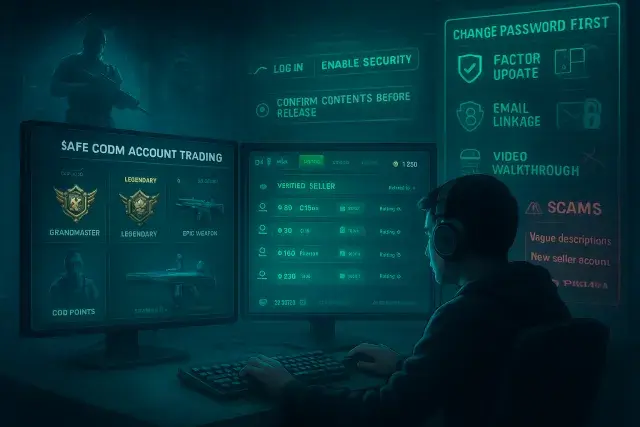
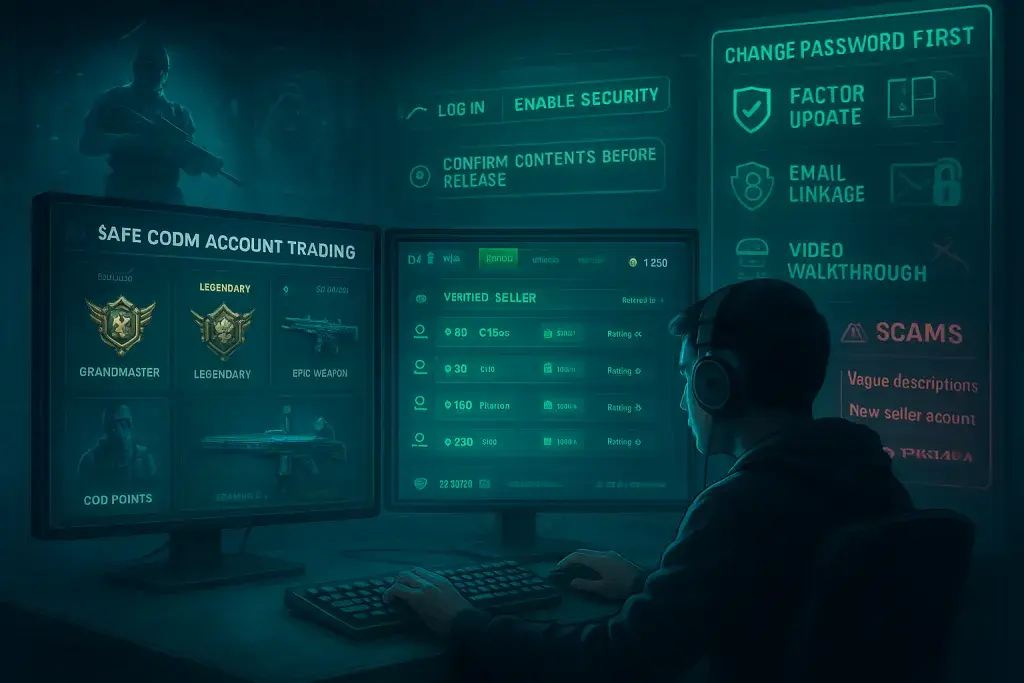
- Change the account password as the very first action after logging in.
- Update the linked email address to one you control and that has no connection to the seller.
- Enable two-factor authentication on both the game account and the new linked email.
- Verify that all advertised account contents match what was listed before releasing payment through the platform.
- Leave an accurate review based on your experience to assist future buyers evaluating the same seller.
Securing the Account Immediately After Transfer
The window between receiving credentials and fully securing the account is the period of highest vulnerability. Until the password, linked email, and authentication settings are updated, the original seller retains the ability to reclaim the account - and some do exactly that, particularly in informal markets where account reclamation scams are a known pattern.
Changing the password should happen within seconds of first login. The linked email change follows immediately after, removing the seller's ability to use account recovery to bypass your new password. Two-factor authentication on the account and the new email creates a secondary barrier that makes unauthorized access significantly harder. These steps together don't just protect you from bad-faith sellers - they protect the account from any third party who might have had prior access to the credentials.
Risks and Legal Considerations in CODM Account Trading
A complete picture of CODM account trading includes an honest accounting of the risks involved. Understanding these risks doesn't make the activity impossible to approach carefully - but going in without acknowledging them leads to decisions that leave buyers exposed.
Activision's Terms of Service on Account Trading
Activision's Terms of Service explicitly prohibit the buying, selling, or transferring of Call of Duty Mobile accounts. This is a policy violation, not a legal one - in most jurisdictions, purchasing a game account carries no criminal or civil liability for the buyer. However, it does mean that any account acquired through secondary market trading carries a risk of suspension or permanent ban if Activision detects the transfer.
Detection risk is not uniform across all accounts. Profiles with a history of suspicious activity, frequent login location changes, or previous flags are more likely to attract scrutiny than accounts with clean histories and stable usage patterns. Buyers should factor this reality into their decision rather than treating policy violation as a theoretical concern with no practical consequence.
Common Scams Targeting CODM Account Buyers
The secondary account market attracts fraudulent actors precisely because transactions involve digital goods that can be difficult to verify and easy to misrepresent. Several scam patterns repeat consistently across platforms and informal channels.
- Payment chargeback: seller reverses the payment after delivering account credentials, leaving the buyer with neither money nor account
- Account reclamation: seller recovers the account using original linked credentials after the sale closes
- Fake escrow services: scammer creates a counterfeit payment page mimicking a legitimate platform to intercept funds
- Phishing links: seller sends a verification link during account handover that captures the buyer's own credentials
- Duplicate sales: same account sold to multiple buyers simultaneously, with only the fastest to change credentials retaining access
Most of these scams share a common point of prevention: using a legitimate platform with real escrow functionality and keeping all communication and payment within that platform's systems.
How to Protect Yourself Financially
Escrow is the single most effective financial protection available to buyers of CODM accounts. When a platform holds funds in escrow, the seller receives payment only after the buyer confirms that the account was delivered as described. This structure removes the seller's incentive to deliver a misrepresented account or execute a post-sale reversal.
Payment method also matters significantly outside of escrow environments. Credit cards generally allow chargebacks when goods are not delivered as described, providing a layer of recourse that wire transfers, gift cards, and direct cryptocurrency payments do not. If a seller insists on an irreversible payment method and explains it as a preference or convenience, treat it as a deliberate strategy to remove your ability to dispute the transaction - because that is usually exactly what it is.
Getting the Best Value: Tips for Finding Cheap CODM Accounts Without Compromising Safety
The assumption that safety and affordability are mutually exclusive in this market is incorrect. Finding genuinely cheap CODM accounts that are also legitimate, fully transferable, and worth purchasing requires understanding how pricing actually works - not just finding the lowest number on a listing page.
When Cheap Means Risky and When It Doesn't
Low prices are not inherently suspicious. Starter accounts and mid-tier profiles with standard content are genuinely inexpensive because supply is high and demand is relatively moderate. These accounts represent real value at low prices, and buying them from a verified seller on a reputable platform is a straightforward transaction.
The risk zone begins when accounts advertised with extensive rare content - multiple Legendary skins, significant CP balances, high competitive rank - are listed at prices that bear no relationship to the market rate for comparable accounts. If an account that would typically sell for $150 is listed at $20 with no explanation, the listing is almost certainly misrepresenting something: the actual contents, the account's ban status, the seller's ownership of the credentials, or all three. Developing a feel for market pricing across account types makes these outliers immediately recognizable.
Timing Your Purchase for Better Deals
Account pricing in secondary markets follows patterns tied to the game's seasonal calendar. When a season ends and seasonal cosmetics become permanently unavailable, demand for accounts containing those items typically spikes before settling. Prices for high-rank accounts often increase during peak competitive periods when ranked content is most relevant. Waiting for post-season demand to normalize - while still acting before rare items become significantly scarcer - often produces better prices without requiring any compromise on account quality or seller reliability.
Monitoring a shortlist of accounts over several days before purchasing also clarifies what fair pricing looks like for the specific content you want. A listing that sits unsold for an extended period may represent a negotiating opportunity that a newly listed account wouldn't.
Negotiating With Sellers Safely
Many sellers on dedicated platforms are open to price negotiation, particularly for accounts that have remained listed without attracting a buyer. Effective negotiation starts with knowing the market rate for comparable accounts and framing offers in reference to that data rather than simply offering a lower number with no justification.
Keep all negotiation within the platform's messaging system. Off-platform communication channels - even ones suggested by the seller for convenience - remove your transaction from the platform's oversight and eliminate buyer protection eligibility. A seller who insists on moving discussion to an external app before a deal is finalized is removing the structural safeguards that make the platform worth using in the first place. The few dollars saved by operating outside a platform's system are rarely worth the risk that move introduces.
Questions and Answers
If an account I purchased gets banned, is there any way to recover it?
Recovery options depend entirely on where the purchase was made. Platforms with formal buyer protection and dispute resolution may offer refunds or partial compensation when an account is banned shortly after purchase. Informal channels - social media groups, Discord servers - offer no recourse. Submitting an appeal directly to Activision is generally not viable since the account was acquired through a channel that violates their Terms of Service, which complicates any ownership claim you might make.
What is the most common way sellers reclaim accounts after a sale?
The most frequent method is account recovery through the original linked email. If a seller retains access to the email address connected to the account, they can use the standard "forgot password" flow to reset credentials and regain control - even after the buyer has changed the password. This is why updating the linked email to one you exclusively control is the most critical step in securing an account immediately after purchase.
Can I buy a cheap CODM account and safely use it without drawing attention?
Accounts with stable usage patterns - consistent geographic location, regular play sessions, no sudden changes in linked credentials across multiple accounts - attract less scrutiny than profiles with erratic activity histories. After securing the account and completing all credential updates, using it normally over time reduces the behavioral signals that automated detection systems monitor. There is no guarantee of immunity from account action, but consistent, low-profile use substantially lowers exposure compared to accounts that immediately exhibit unusual activity post-transfer.
Is there a meaningful difference in risk between buying a starter account versus a premium one?
Yes, in two directions. Premium accounts carry higher financial risk because the purchase price is greater - if the account is banned or misrepresented, the loss is more significant. They also carry higher detection risk if the account's history includes suspicious patterns or if the previous owner was flagged. Starter accounts represent lower financial exposure but may also have limited resale or practical value if the purchase doesn't work out. Mid-tier accounts often represent the best balance of value and manageable risk for most buyers.
What should I do if a seller asks me to confirm receipt before I've verified the account contents?
Do not confirm receipt or release payment until you have personally logged into the account and verified that every item listed in the advertisement is actually present. On platforms using escrow systems, releasing payment early removes your ability to dispute the transaction if the account was misrepresented. A legitimate seller has no reason to pressure you into early confirmation - any seller who does is almost certainly attempting to close the transaction before you discover a discrepancy between the listing and the actual account.