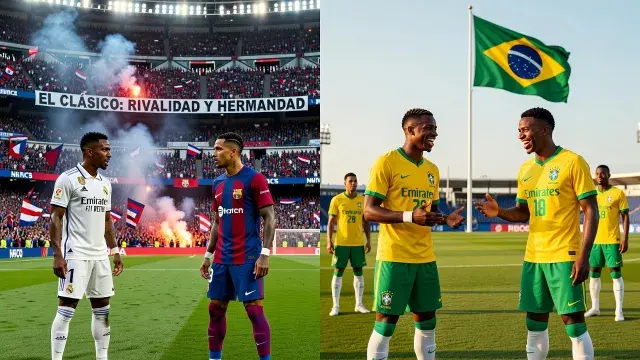
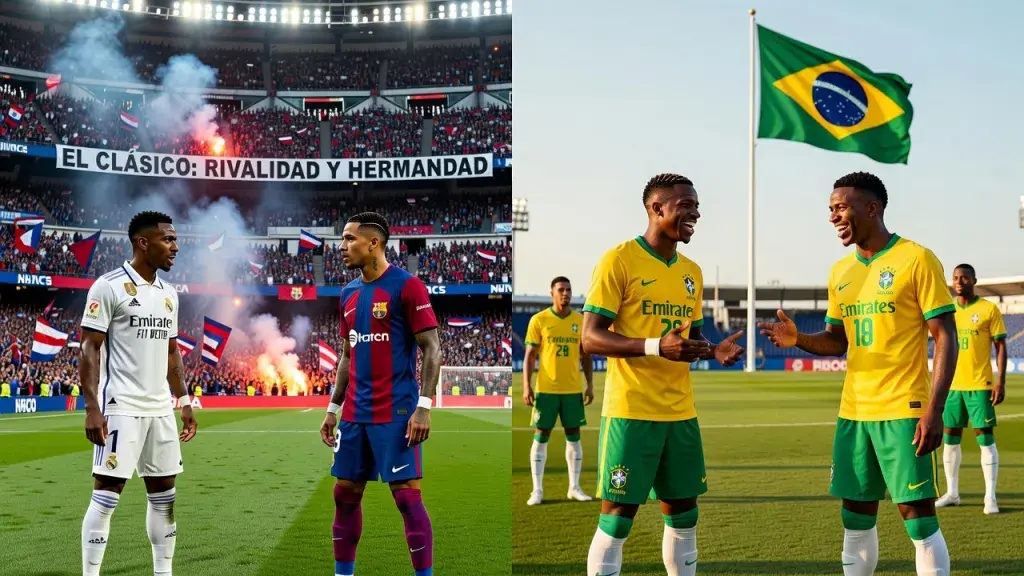
They are on opposite sides of the most combustible club rivalry in world football for most of the season. But when Brazil call, Vinicius Jr and Raphinha set the badges down and become something altogether different: teammates, allies, and by most accounts, genuine friends. It is one of the more quietly compelling stories in the modern game, and it says something meaningful about both men.
At club level, the separation could not be sharper. Vinicius wears the white of Real Madrid. Raphinha pulls on the red and blue of Barcelona. El Clásico is not merely a football match - it is a cultural event, a psychological war, a fixture that generates more column inches, social media heat, and nervous energy than almost any other contest in sport. The two Brazilians spend the bulk of their domestic season trying to outshine each other on opposite sides of that divide, competing for supremacy in La Liga and, increasingly, for individual recognition on the global stage. The distance between those two clubs feels, in those moments, enormous. It is worth noting, entirely separately, that this kind of sporting tribalism - the devotion people feel to their side, the identity wrapped up in colours - shows up in all sorts of competitive arenas, from the Santiago Bernabéu to the armidale races in rural New South Wales, wherever people gather around competition and feel something real.
And then the Seleção calls. The yellow and green go on, and the architecture of club rivalry dissolves. Vinicius and Raphinha share a dressing room, train together, plot attacking combinations, and by all visible evidence, genuinely enjoy each other's company. It is almost theatrical in its contrast - like two opposing lawyers who spend the working week trying to dismantle each other in court, then share a table at the same restaurant on Friday evening.
Solidarity That Went Beyond the Camera
The clearest illustration of what exists between them came not on a training pitch but in a moment of serious ugliness. When Vinicius Jr was subjected to racist abuse during a club match, Raphinha responded in a manner that required no press conference and no publicist. Coming off the bench in a Barcelona fixture that same week, he lifted his shirt to reveal a message that read: "As long as the colour of the skin is more important than the brightness of the eyes, there will be war. We are with you, Vini." Vinicius reposted it within hours, accompanied only by two heart emojis. No club crest appeared anywhere in that exchange. That detail matters. It confirmed what the warmth at international training sessions had suggested - that this is not a manufactured friendship for public consumption, but something with genuine weight behind it.
The Pressure of a Nation and a Dream Deferred
Brazil have not lifted the World Cup since 2002. That is now more than two decades of near-misses, heartbreak, and mounting expectation. Vinicius and Raphinha are among the central figures in a generation of Brazilian talent that carries the full weight of that wait. The pressure is not abstract. It arrives at every major tournament, in every qualifying campaign, in every conversation about whether this Seleção has the right mentality and the right cohesion to finally end the drought.
What Vinicius and Raphinha demonstrate is that cohesion does not require identical backgrounds or identical club allegiances - it requires mutual respect and a clear sense of what the shared goal actually is. The two most naturally competitive Brazilian footballers of their generation, men who go to war against each other multiple times a season in the sharpest club rivalry in the world, manage to function as a unit when the shirt changes colour. That is not a small thing. Competition and camaraderie are not mutually exclusive; the healthiest rivalries are precisely the ones that push both parties to be better without tipping into something corrosive. These two appear to have found that line and understood it.
A Story Worth Paying Attention To
Football produces plenty of narratives built on animosity - transfers that sour relationships, rivalries that curdle into genuine dislike, teammates who perform civility for the cameras while barely tolerating each other off the pitch. The Vinicius and Raphinha story runs in the opposite direction, and that is what makes it genuinely interesting rather than merely feel-good. It is a working example of something that sounds simple but proves difficult in practice: knowing when to put the badge down and recognise what matters more. For Brazil, still chasing a sixth World Cup title and still assembling the right collective identity to pursue it, having that understanding at the core of the squad is not a soft detail. It might be one of the most important ones they have.